Peak season is not a single spike anymore. It is a rolling tide that starts with early holiday promos, crests on Black Friday and Cyber Monday, then keeps surging through December with returns swells in January. If you manage an e‑commerce supply chain, you can feel the pressure in specific places: linehaul arriving late at night, parcel carriers enforcing volume caps, inventory trapped in inbound trailers, customer service tickets piling up. Cross docking, when designed and timed well, relieves that pressure by collapsing dwell time between inbound and outbound and letting inventory move at the speed of demand rather than the speed of warehousing.
This is not theory. Cross docking is a discipline, and peak season exposes every weak handoff and every blind spot in your network. The following guide distills what works in practice, especially for brands that ship into Texas and the South Central corridor, where a hub such as a cross dock facility in San Antonio, TX can reset lead times across multiple states overnight.
What cross docking actually solves
At its core, a cross dock warehouse is a flow-through node. Product arrives on a truck or container, gets unloaded, verified, sorted by destination or order, then reloaded onto outbound transportation. The inventory may never enter putaway. Done right, the cycle time is measured in hours, not days. Done poorly, it becomes an expensive detour.
The strongest use cases in e‑commerce peak season share two conditions. First, high predictability of inbound arrival windows, even if the windows are narrow. Second, a repeatable outbound pattern, whether that is zone-skipped parcel injection, store replenishment for retail partners, or direct-to-consumer orders packed upstream and only needing final mile carriage. When those two align, a cross dock facility turns variability into throughput.
Why speed beats storage when the calendar gets tight
A static warehouse stocks inventory; a cross dock warehouse pulls time out of the order cycle. During peak, time is the scarcest asset. Every extra day of dwell turns into lost delivery promises or higher paid upgrades. The practical benefits show up in a few measurable ways.
Transit compression matters most on lanes where your DC footprint is thin or where parcel zones penalize you. If you linehaul freight from West Coast ports to Texas, then inject parcels from a cross dock facility in San Antonio, TX, you cut zones for much of the South and Midwest. That drop in zones can lower parcel cost by 10 to 25 percent on select lanes, depending on the carrier matrix. It also turns three-day ground into two-day, which expands ground-service promise coverage without air upgrades.
Capacity smoothing is the second advantage. Peak season carriers enforce appointment windows and can refuse live loads when docks clog. A well-run cross dock warehouse acts as a shock absorber. It staggers inbound unloads, interleaves them with sortation, then meters outbound dispatch across parcel, LTL, and dedicated routes so you hit carrier cutoffs consistently. Consistency is currency in November.
Finally, inventory visibility improves in a counterintuitive way. You touch the product less but you track it more closely. Cross docking relies on precise scans at the door and at the trailer, which forces better data hygiene. In peak season, that discipline turns into fewer where-is-my-order contacts and a lower exception rate.
When cross docking is the wrong tool
I have seen brands push everything through a dock in December. It looks efficient until you account for the friction. Some SKUs simply do not belong in a cross dock flow. Fragile sets that require kitting, products with complex serial capture, and promotional bundles assembled on the fly do better in a traditional DC or a pop-up facility with light-value-added services.
Order profiles also matter. If your average order has five items from different vendors and you cannot synchronize arrivals, the dock becomes a staging area anyway, which negates the benefit. Cross docking thrives on full-case or full-inner moves that map cleanly to outbound demand. If your demand is lumpy and highly localized, you may be better off pushing those SKUs to forward stocking locations before the surge.

The rule of thumb I use: if more than 20 to 30 percent of the units need rework beyond simple relabeling and sortation, it is no longer cross docking, it is short-term warehousing. Reconsider the flow design.
Designing a peak-season cross dock flow
There is no single best layout, but high-velocity docks share a set of choices that reduce touches and compress time. Start with door strategy. Assign a consistent bank of inbound doors by lane so that your team can cross dock facility predict where Unit Load Devices or pallets will appear. Place parcel induction and small sortation near the outbound doors reserved for your primary parcel carriers, and cluster LTL consolidation in the opposite corner to keep freight lanes distinct.
Slotting on a cross dock is temporal, not physical. The “slots” are staging zones sized by expected hourly volume, with clear rules for aged freight. In peak, I like a two-hour rule: if a staging lane holds freight older than two hours, supervisors must decide whether to break the lane into dynamic waves or trigger a partial dispatch. This keeps the dock from turning into a warehouse floor.
Technology matters, but not as much as timing. Your WMS or yard-management tool needs to support door-level tasking, scan-based verification, and real-time exception capture. The fanciest software does not help if your linehaul arrives after the parcel cutoff. Build your flow around the cutoffs. For example, if UPS and USPS final pickups are at 7 p.m. and 6 p.m., while an LTL consolidation departs at 8 p.m., you prioritize parcel induction on everything that can make same-day injection by 5 p.m., then swing labor to LTL staging as those hits build. The day’s rhythm should be visible on a single whiteboard that anyone can read at a glance.
The San Antonio advantage for South Central networks
San Antonio sits at a useful crossroads. East-west I‑10 and north-south I‑35 give you reach into Houston, Austin, Dallas-Fort Worth, and the I‑35 corridor up to Oklahoma City and beyond. From a cross dock facility in San Antonio, TX, next-day ground is feasible across much of Texas and parts of Louisiana. Two-day ground reaches New Mexico, Arkansas, and southern Missouri with room to spare before weekend deadlines.
For brands importing through Houston or Laredo, or trucking from Southern California, San Antonio can be the point where you split loads by carrier network. I have seen shippers run two parallel injections out of a single evening: parcels destined for Texas and Oklahoma injected locally, while Southeast orders move on a night linehaul to a partner facility in Louisiana or Georgia for next-morning injection. The split adds a linehaul cost, but when it prevents air upgrades on thousands of packages, the math generally favors the split during peak weeks.
There is a local nuance worth calling out. The labor market in San Antonio is steadier in Q4 than in some coastal port cities, which helps with overnight shifts. However, dock congestion can spike around regional retail replenishment pushes in early December. If you plan to use cross docking services in San Antonio, build flexibility into delivery appointments and secure backup parcel pickups ahead of the surge. Carriers prioritize customers that keep docks predictable.
What “near me” should actually mean
Searches for cross docking services near me or cross dock warehouse near me imply convenience. Proximity helps, but it is not the only metric, especially during peak. The better question is: which node clips the most time between my inbound and my customer’s doorstep within the carrier constraints I face?
For e‑commerce, near me usually resolves to near my carrier injection points or near my last reliable cutoffs. If your customers are concentrated in Texas and adjoining states, a cross dock warehouse in San Antonio, TX is effectively near you, even if your headquarters sits states away. Conversely, a small cross dock warehouse two miles from your office but far from high-volume carrier hubs may add risk, not remove it.
Evaluate “near” by three clocks: inbound arrival windows, outbound pickup cutoffs, and customer promise times. If a facility shortens the combined time across those three, it qualifies as near in operational terms.
Playbook for peak: how to prepare 45 days out
Most peak headaches trace back to decisions made, or not made, in early October. Lead time is your friend. The following short checklist captures the prep that prevents midnight fire drills.
- Confirm carrier cutoffs and volume caps by facility and day of week, then publish them dock-wide in plain language. Pre-assign inbound doors by lane and vendor, with escalation rules for late arrivals and OS&D. Stage supplies and labels for the top 20 percent of SKUs by volume, including preprinted parcel labels if your flow supports it. Load test your scan-and-sort process with a simulated peak hour. If you cannot sustain it for two hours straight, fix the bottleneck before November. Set exception codes that actually drive action. “Late inbound” is useless unless it triggers a partial wave or a dispatch change.
That list sounds simple. During peak, simple wins. Complexity belongs in the planning spreadsheet, not on the dock at 6:30 p.m.
Data you must see to manage the day
You cannot manage what you cannot see, and peak season steals visibility in little ways. A trailer misses its ETA by 18 minutes, a label reprint station goes down for 12 minutes, and an outbound parcel truck closes five minutes early. These micro-slips cascade unless you track the right signals.
The four metrics I keep front and center are throughput per labor hour on the dock, aged freight by staging lane, on-time to cutoff percentage by carrier, and exception rate by inbound lane. The first tells you if your labor plan matches reality. The second alerts you when staging turns into static storage. The third is your real promise rate to customers. The fourth isolates upstream problems masquerading as downstream failures.
Layer those with two qualitative checks: a brief floor walk at mid-shift to watch for idle pallets or chokepoints, and a daily five-minute postmortem focused on a single question, which decision would have bought us the most time today? Peak rewards teams that learn fast, not teams that try to plan away every surprise.
Cost, risk, and the break-even line
Cross docking is not free. You pay for door time, labor, systems, and often extra touches. The economics pencil out when the gains in parcel cost, delivery speed, and reduced storage fees outweigh those touches. During peak, that usually happens because parcel costs jump, capacity is constrained, and the value of one-day faster transit grows.
Here is a practical way to estimate the break-even. Calculate your per-unit cross dock handling cost, including labor and facility fees. Quantify the parcel zone reduction and its per-unit savings when injecting from your chosen node, such as a cross dock facility in San Antonio, TX. Add any reduced storage or demurrage you avoid by flowing instead of storing. If the net savings per unit is positive and you can protect your service levels, move. If it is within a few cents, run a pilot on the highest-volume SKUs and inspect the exception costs before scaling.
Risk comes from two places: late inbounds and missed cutoffs. You mitigate the first by firm appointment-setting and penalties for chronic offenders, or by building buffer with early-arrival windows for suppliers with spotty records. You mitigate the second by overbooking pickups early in peak and maintaining a contingency with a regional carrier for hot shots or late parcel injection, even if the per-stop cost is higher.
How cross docking interacts with returns and reverse logistics
January often hurts more than December. Returns flood in, and the instinct is to process them at the same node that dispatched the orders. Cross docking can help, but only if you separate forward flows from reverse flows physically and logically. The dock thrives on velocity. Returns thrive on inspection and decisioning, which are slower.
One workable pattern is to triage returns at the local node, consolidate them into clean streams, then linehaul those to a returns-specialist facility for refurbishment or restocking. If your cross dock warehouse has a spare lane during daytime hours, it can serve as the consolidation and outbound point for reverse logistics, while keeping evenings dedicated to forward flows in peak weeks.
People and training: the difference between theory and throughput
Facilities and systems set the stage; people move the freight. Peak season magnifies the gap between a trained dock team and a rotating cast of temps. Cross docking relies on repetition and standard work, not just strength. Train for three things above all: scan discipline, hazard recognition in dense staging zones, and hand signals or radio protocols that cut through noise when a lane change or a door reassignment happens on the fly.
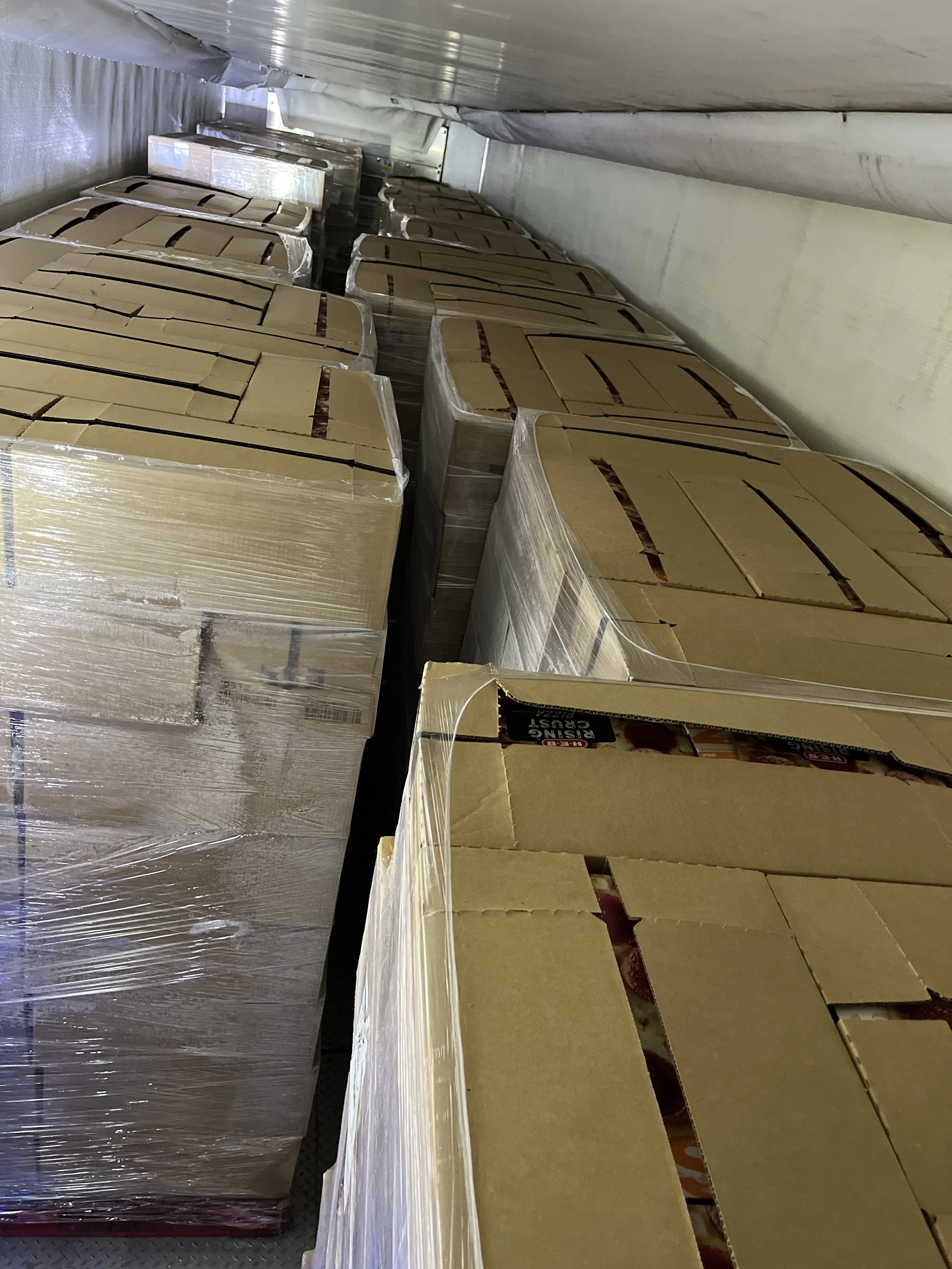
I have watched a night shift gain 12 percent throughput after supervisors replaced a cluttered radio channel with a simple zone-based callout protocol. Even small touches, like staging empty pallets in predictable stacks and painting bright lines around no-park aisles, shave seconds off every move. Seconds scale when you handle thousands of cartons.
Integrating cross docking with upstream vendors
A cross dock is only as reliable as the labels and load plans that show up at the inbound door. If your vendors ship mixed pallets with loose cartons and partial inner packs, you will bleed time. During October onboarding, share your cross dock requirements. Specify case pack standards, label locations, carton barcode symbology, and ASN timing. If a vendor’s systems cannot meet your ASN spec, ask for a structured CSV sent on dispatch, then map it into your WMS. Imperfect data is manageable when it is predictable.
For large vendors, align on load building. If you intend to split by parcel carrier at the dock, request palletization by carrier flow upstream. If the vendor balks, counter with time-stamped unload data from last peak to demonstrate the downstream impact. In my experience, a vendor that sees concrete cycle-time improvements is more willing to adjust.
What good looks like on the dock during the surge
Walk a dock at 5 p.m. during peak and you can tell within minutes whether it will make cutoffs. Good looks like clear lanes with visible aged-freight tags, handhelds chirping but not screaming, supervisors watching the pinch points rather than chasing paperwork, and outbound trailers closed on time with seals recorded correctly. The best docks feel calm at the edges even when the center hums.
In San Antonio, the pattern often includes a late-afternoon inbound burst off I‑35 from Austin and Dallas, a second wave from I‑10 eastbound, and a final trickle from Laredo. The dock sequence prioritizes parcel injection first, LTL consolidation second, then dedicated store deliveries last. When it flows, parcels roll to carriers with five to ten minutes of buffer before official cutoffs, just enough margin to absorb a jammed print head or an unexpected carton recount.
Selecting the right partner
If you are evaluating providers for cross docking services San Antonio or searching broadly for cross docking services near me, test for three attributes. First, operational candor. Ask for last peak’s on-time-to-cutoff rate by carrier, not just capacity claims. Second, system connectivity. Can they ingest your ASNs and return clean scan events back into your order management system within minutes, not hours? Third, surge staffing depth. Who shows up at 11 p.m. the week after Cyber Monday when trailers stack two deep?
A site tour helps, but an evening observation helps more. Watch a live close. If the dock looks staged only for the tour, you will see it in the small things: stray pallets in fire lanes, temporary signage with half-torn tape, supervisors defending numbers rather than explaining decisions. Choose the partner whose reality matches their pitch.
A practical example: a holiday bundle program
A DTC home goods brand ran a holiday bundle with two SKUs shipped from different factories. In November, bundles were pre-kitted in a secondary DC. By December 10, kitting labor maxed out, orders backlogged, and shipments slipped. We reconfigured for cross docking. Factory A shipped full-case bundles of Item 1 labeled for parcel injection; Factory B shipped full-case Item 2 with synchronized ETAs. At the cross dock warehouse in San Antonio, both streams arrived within a two-hour window. The team applied a single bundle label printed upstream, married the cartons on the dock using scan-to-order logic, and injected to parcel within the same shift.
The change shaved two days from the promise, eliminated air upgrades past December 15, and cut per-order handling costs slightly even with added dock labor. The key was synchronization. Without aligned ETAs and clean labeling, the dock would have turned into an expensive staging floor.
Scaling down after the peak
January demands a different posture. Volume falls, but the returns wave arrives. Resist the temptation to keep the full cross dock footprint live unless it serves a clear purpose. Shrink to a lean evening crew that handles expedited SKUs and reverse logistics consolidation. Use the quieter weeks to update SOPs based on what actually happened, not what you planned. Audit exception codes, reconcile any ghost aged-freight entries, and retire any temporary band-aids that crept into the process.
If San Antonio was your seasonal node, decide whether to keep a smaller standing program there. Many brands benefit from year-round parcel injection on two or three days a week to sustain faster ground coverage in the region. The carry cost is modest compared to the seasonal learning you preserve.
Bringing it together
Cross docking is not a silver bullet, but it is a sharp tool when used for the right jobs. During e‑commerce peak season, it lets you trade storage for speed, smooth capacity, and keep promises without bleeding margin on air. The right cross dock facility, whether in your backyard or strategically located like a cross dock facility in San Antonio, TX, becomes a control point where your planning turns into delivered orders.
If you approach it with clear flows, honest constraints, disciplined scanning, and cutoffs that drive the day’s rhythm, your dock will feel less like a bottleneck and more like a relay handoff. Customers do not see the dock. They feel the speed. And in peak season, speed is the difference between delight and discount codes.
Business Name: Auge Co. Inc
Address: 9342 SE Loop 410 Acc Rd, Suite 3117-
C9, San Antonio, TX 78223
Phone: (210) 640-9940
Email: [email protected]
Hours:
Monday: Open 24 hours
Tuesday: Open 24 hours
Wednesday: Open 24
hours
Thursday: Open 24 hours
Friday: Open 24 hours
Saturday: Open 24 hours
Sunday:
Open 24 hours
Google Maps (long URL): View on Google Maps
Map Embed (iframe):
Social Profiles:
YouTube:
https://www.youtube.com/channel/UCuYxzzyL1gBXzAjV6nwepuw/about
Auge Co. Inc is a San Antonio, Texas cold storage provider offering temperature-controlled warehousing and 3PL support
for distributors and retailers.
Auge Co. Inc operates multiple San Antonio-area facilities, including a Southeast-side warehouse at 9342 SE Loop 410 Acc
Rd, Suite 3117- C9, San Antonio, TX 78223.
Auge Co. Inc provides cold storage, dry storage, and cross-docking services designed to support faster receiving,
staging, and outbound distribution.
Auge Co. Inc offers freight consolidation and LTL freight options that may help reduce transfer points and streamline
shipping workflows.
Auge Co. Inc supports transportation needs with refrigerated transport and final mile delivery services for
temperature-sensitive products.
Auge Co. Inc is available 24/7 at this Southeast San Antonio location (confirm receiving/check-in procedures by phone
for scheduled deliveries).
Auge Co. Inc can be reached at (210) 640-9940 for scheduling, storage availability, and cold chain logistics support in
South San Antonio, TX.
Auge Co. Inc is listed on Google Maps for this location here: https://www.google.com/maps/search/?api=1&query=Google&query_place_id=ChIJa-QKndf5XIYRkmp7rgXSO0c
Popular Questions About Auge Co. Inc
What does Auge Co. Inc do?
Auge Co. Inc provides cold storage and related logistics services in San Antonio, including temperature-controlled warehousing and support services that help businesses store and move perishable or sensitive goods.
Where is the Auge Co. Inc Southeast San Antonio cold storage location?
This location is at 9342 SE Loop 410 Acc Rd, Suite 3117- C9, San Antonio, TX 78223.
Is this location open 24/7?
Yes—this Southeast San Antonio location is listed as open 24/7. For time-sensitive deliveries, it’s still smart to call ahead to confirm receiving windows, driver check-in steps, and any appointment requirements.
What services are commonly available at this facility?
Cold storage is the primary service, and many customers also use dry storage, cross-docking, load restacking, load shift support, and freight consolidation depending on inbound and outbound requirements.
Do they provide transportation in addition to warehousing?
Auge Co. Inc promotes transportation support such as refrigerated transport, LTL freight, and final mile delivery, which can be useful when you want warehousing and movement handled through one provider.
How does pricing usually work for cold storage?
Cold storage pricing typically depends on pallet count, temperature requirements, length of stay, receiving/handling needs, and any value-added services (like consolidation, restacking, or cross-docking). Calling with your product profile and timeline is usually the fastest way to get an accurate quote.
What kinds of businesses use a cold storage 3PL in South San Antonio?
Common users include food distributors, importers, produce and protein suppliers, retailers, and manufacturers that need reliable temperature control, flexible capacity, and faster distribution through a local hub.
How do I contact Auge Co. Inc for cold storage in South San Antonio?
Call (210) 640-9940 to discuss availability, receiving, and scheduling. You can also
email [email protected]. Website: https://augecoldstorage.com/
YouTube: https://www.youtube.com/channel/UCuYxzzyL1gBXzAjV6nwepuw/about
Google Maps: https://www.google.com/maps/search/?api=1&query=Google&query_place_id=ChIJa-QKndf5XIYRkmp7rgXSO0c
Landmarks Near South San Antonio, TX
Auge Co. Inc proudly serves the Southeast San Antonio, TX area, Auge Co. Inc offers cross dock facility and logistics support for businesses operating near historic and high-traffic corridors.
If you're looking for a cross dock warehouse in Southeast San Antonio, TX? Visit Auge Co. Inc near Toyota Motor Manufacturing Texas.